MERRY CHRISTMAS, EVERYONE!
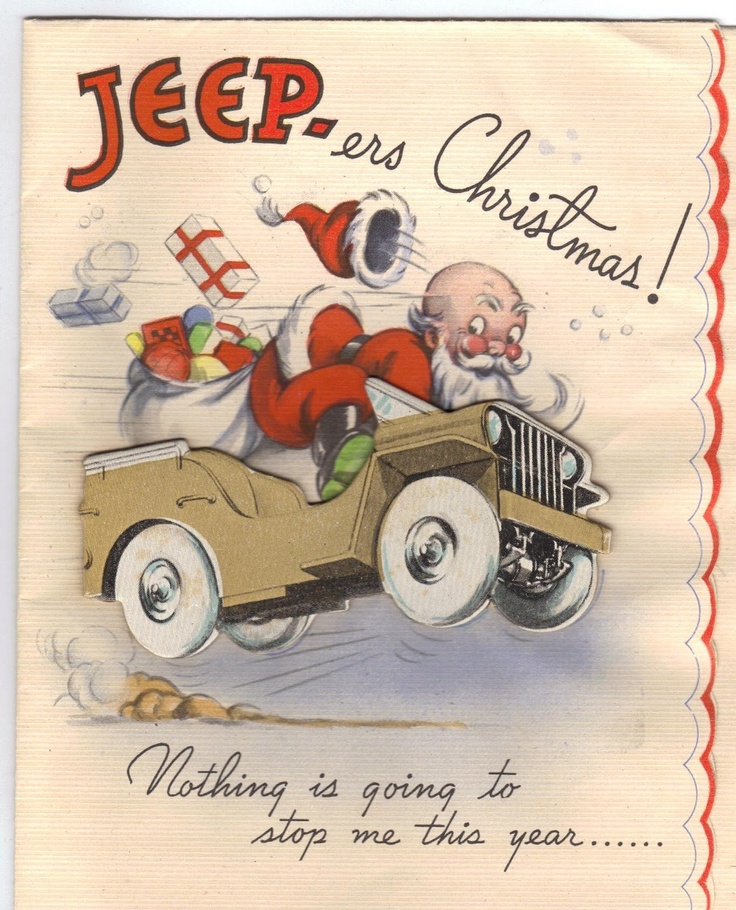 |
| Christmas card, 1944. |
The day has finally come, the day we cherish so dear, the day we come together and celebrate the many reasons for the season, Christmas. It is a beautiful day for celebrating the traditions we hold close to our hearts. Christmas has taken on many forms since it was first celebrated two millennia ago; in fact, there are at least five distinct changes over these many, many years.
 |
| Puritan official notice banning Christmas celebrations |
Winter feasts originated in pagan societies in which the ancient peoples needed to spur life and hope in the deep, dark winter months of Europe. Their yuletide feasts sparked the renewal of spring and the hope for a year of plenty. Then, the biggest change of all came with the birth of Christ and the new Christian faith. While the date of Jesus’ birth is unknown; logically, we can all assume it would have most likely been in the spring, but the Papacy declared the 25th of December as the official day; most likely continuing the feasts and festivals of pagan customs. Boisterous celebrations continued to be held for centuries. But, not so ironically, the Puritans in Boston felt joyous celebrations diminished the meaning of Christmas and actually banned all merry celebrations of any kind, which put a damper on the rest of the country. (Maybe, that’s part of the reason England all but kicked them out of the country? Just a thought.) That only lasted a short time, thank goodness, and by the 19th century, Christmas went through another major reinvention.
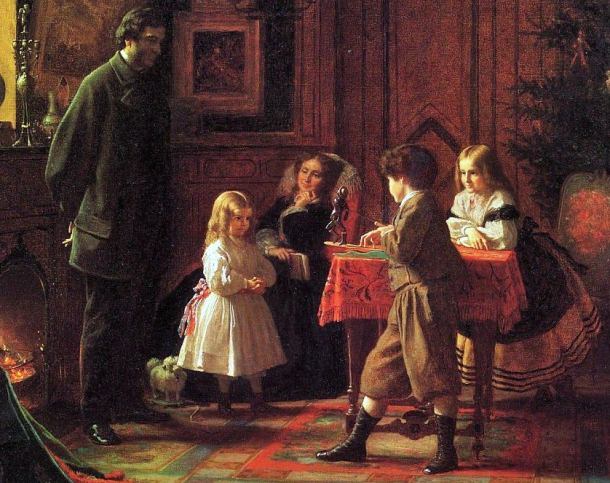 |
| Eastman Johnson's Christmas Time: the Blodgett Family, 1864. |
Americans changed the Christmas holiday into a family occasion of nostalgia and joy. With so many cultures melding into one, it is no wonder America would be the place to change the holiday forever. During this time, the classic novel A Christmas Carol, by Charles Dickens, became one of the most popular holiday novels to date. The message of charity and good will towards men could not have come at a better time for the Americans and English. For the next one hundred years, following the novel, Americans looked to the new cultures melding into one for Christmas traditions and formed the perfect family holiday. The most recent changes in traditions we celebrate today are actually a result of World War II. We all know it was the greatest generation, but many may not realize how they have literally helped shape the America we see today. These traditions are just another reason to appreciate and thank the men and women of the 1940s. We are forever in their debt.
 |
| Family singing carols in front of the tree, 1945. |
 |
| Soldier sharing his Christmas package with the children in a European town. |
Also, did you know that many of our favorite holiday tunes were written during the war? I don’t know about you, but my holiday season does not start until the songs “White Christmas” and “Have Yourself a Merry Little Christmas” have been played in the house. “Let It Snow,” “Baby, It’s Cold Outside,” and of course, “I’ll Be Home for Christmas” are a few of the other songs written during the 1940s. All the songs relate back to the war and the feelings of pain and longing everyone felt for their loved ones. These holiday classics have held true for the past 70 plus years and they have been relevant through every conflict America has been part of since World War II. They will never leave our hearts.
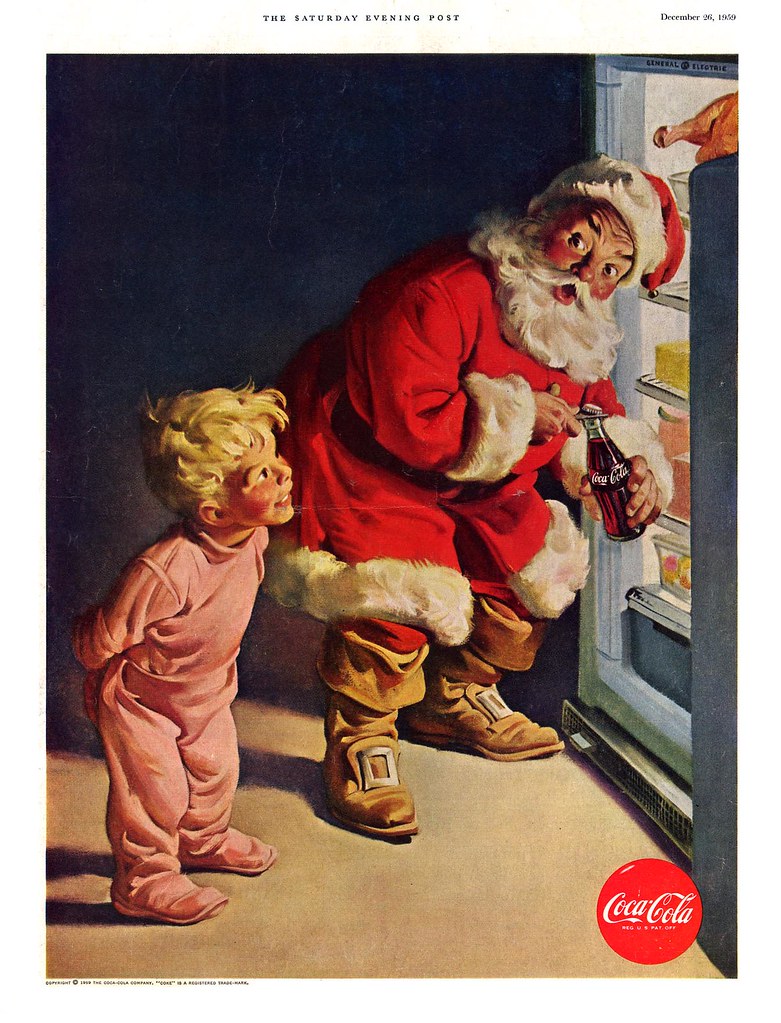 |
| Coca-Cola Christmas add, December, 1943. |
As if there aren’t already so many wonderful changes, even the look of Santa Claus changed during the war! Some may recall, before the war, Santa had a very traditional European look about him. Obviously, that had to change for the war effort, so Santa received an American makeover that has stuck through time.
Even our traditional holiday menu changed because of the war. Rationing and availability created a revised menu for many Americans and soldiers abroad. Of course, people still had their turkey and trimmings as best they could manage, but food items that were not on the rationed lists became prevalent in everyday homes, like oysters and lobster. When the soldiers came home, their families kept the new additions and now they are part of our traditions today.
During the Middle Ages, Christmas merriment was quite rowdy and could be compared to the Mardi Gras parties of today.
 |
| Medieval painting depicting Christmas celebration |
It was not until June 26, 1870 that Christmas became a federally recognized holiday in the United States.
Captain John Smith consumed the first American made cup of eggnog in 1607, Jamestown.
Joel R. Poinsett brought the bright red and green plant, named after himself, to America from Mexico, in 1828.
The legend of Rudolph the Red Nose Reindeer was created in 1939 as a ploy to attract customers into the Montgomery Ward department store. It worked.
In 1941, a 5 foot Christmas tree was only .75 cents.
During World War II, the shortage of men resulted in a shortage of dressed up Santa’s. Women donned the costumes in their absence so thousands of children could still experience the magic of Christmas.
The term Xmas has actually been used for over a thousand years. The "X" is the Greek symbol for "Chi", which is the first letter for the Greek spelling of Christos, or Christ.
I hope you all have a Merry Christmas and a Happy New Year!
Take care,
Elizabeth


No comments:
Post a Comment