 Hello Everyone,
Now that it is the New Year, we can start looking
forward to the next big fundraising event held by the National D-day Memorial,
the GI Jive! If you have attended the Jive in the past then you know how much
fun the event can be with all the laughing, dancing, and eating! It is one of
the highlights of the year! This year the event falls on Valentine’s Day,
Saturday February 14, 2015. What better way to say ‘I love you’ than a night of
1940’s romance and dance. Spend the evening in the beautiful Trivium Estate,
enjoying delicious food, sounds of the 1940s by Karen Nichols Quartet, a silent
auction, and an exciting dance competition with prizes! Doors open at 6:00 o’
clock in the evening and the fun does not stop until 10:30 PM. Tickets can be
purchased through the Foundation’s office; our phone number is (540) 586-3329. Tickets
are $75 for individuals and $150 per couple. REMEMBER, space is limited and
tickets are sold on a first come first serve basis so don’t miss out on a night
of elegance and romance! It is truly a beautiful and memorable evening.
~~~~~~~~~~~~~~~~~~~~~~~~~~~~~~~~~~~~~~~~~~~~~~
Did you
know?
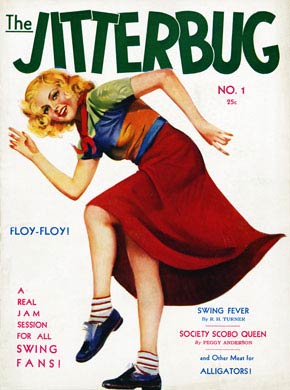 |
| Jitterbug Magazine, 1940s |
The Lindy Hop originated in 1927 when George “Shorty” Snowden, an enthusiastic dancer, was asked to name the new moves by a reporter. Gaining inspiration from a newspaper headline “Lindy Hops the Atlantic”, after famed aviator, Charles Lindbergh, the pilot who completed the first solo flight across the Atlantic that same year. Others refer to the dance as the “Jitterbug”, a six beat variation dubbed by Cab Calloway. The 1930s saw a major growth of admiration for swing and the Lindy Hop dance, but it was not until the 1940s, when US servicemen really took the dance by storm and popularized the moves across the world.
The dance has many variations depending on the tempo
of the music. Dancers can choose to go slow and smooth, the very meaning of
elegance, or they can dance fast and wild, using stunning footwork that seems
to make them fly across the dance floor.
 |
| Faye McKenzie dancing with a service member at the Hollywood Canteen. |
Herbert White created a Lindy Hop dance troupe,
called the Whitey’s Lindy Hoppers, out of the Savory Ballroom. The troupe was
showcased in various films, including “Hellzapoppin” (1941), “Sugar Hill
Masquerade” (1942), and “Killer Diller” (1948).
As with any new pop culture phenomena, swing
dance received some negative reviews. In 1936, Philip Nutl, the President of
the American Society of Teachers of Dancing, said swing would not last through
the winter. However, by 1942, the craze could not be ignored and swing was
ceremoniously accepted by all. The wave of popularity lasted until the mid
1950s but was replaced by new moves by younger generations. However, swing did
see a revival in the 1990s, with grandparents influencing their grandchildren
in the ways of the past.
There are fifteen different swing variations that
have developed over the decades.
1.
Ballroom West Coast Swing: Popular in ballroom dance
schools.
2. Cajun Swing: Born in the bayous of Louisiana.
3. Carolina Shag: Popular in the Carolinas and pays
particular attention to the leader’s nimble feet.
4. Country Western Swing: A style of the Jitterbug
popularized in the 1980s and usually danced to Country Western music.
 |
| Swing dancers at the Trocadero in L.A, CA, 1940s |
5. DC Hand Dancing: Washington D.C.’s version of the
Lindy.
6. East Coast Swing: Six count style of the Lindy, poplar
in dance organizations.
7. Imperial Swing: popular in St. Louis, Missouri.
8.
Jive: International style of swing usually danced in
world competitions.
9. Lindy: smooth style swing dance
10. Pony
Swing: Country Western style of the Cajun swing.
11. Push
Swing: Popular in Dallas, Texas, the dance involves spinning the follower
between dance positions with a rock rhythm break.
12. Savoy
Swing: a style of swing particularly popular in the New York Savoy Ballroom,
1930s and 1940s. This style is very fast, jumpy, and casual-looking.
13. Supreme
Swing: style dance popular in Tulsa, Oklahoma.
14. West
Coast Swing: Popular in California night clubs, 1930s and 1940s, the use of
nimble feet is required to do this dance justice.
15. Whip:
Houston, Texas created the Whip which is similar to the Push Swing dance but with
a wave rhythm break.
I hope you are inspired to dance out our own Jive
this year!
Take Care,
Elizabeth


No comments:
Post a Comment