Search This Blog

Showing posts with label Eisenhower. Show all posts

Thursday, August 4, 2016

Bob Slaughter's Order of the Day: An Endangered Artifact

On June 5 or 6, 1944, hours before embarking on the greatest invasion of WWII, American soldiers, sailors and airmen received a special message from their commander, Gen. Dwight Eisenhower. The printed “pep talk” informed the men that they were “about to embark upon the great crusade,” defined the coming fight as one of freedom versus tyranny, and encouraged the men that “we will accept nothing less than full victory.” Known as the Order of the Day, the D-Day message was one of the most important military documents in US history.

Bob Slaughter, D-Day Veteran
Founder of National D-Day Memorial
Few of the men that day, facing the biggest fight of their lives, thought to save their copies of the Order of the Day. But one man who did was the founder of the National D-Day Memorial:
John Robert “Bob” Slaughter of Roanoke.

Bob was a survivor of D-Day, a sergeant in the 116th Regiment of the 29th Division at Omaha Beach on June 6, 1944. Like his fellow soldiers, he received a copy of the Order of the Day as he awaited the order to begin the invasion of Normandy. But unlike most of the men, he realized the historic nature of the document and of the day. He circulated through his company and had his buddies sign their names to his copy; then folded it into a plastic bag and tucked it into his wallet. He carried his Order of the Day through the rest of his time in service, and afterwards described it as his “most treasured souvenir of the war.”

It was, for many years, his own personal memorial to the men of D-Day. Of the 75 soldiers who signed Bob’s Order that night, eleven would be dead within hours.

Bob went on to become perhaps the best known D-Day veteran in the nation, but he never forgot the men who never made it off those beaches. Often he would speak to school groups, club meetings, or civic organizations, and show his Order of the Day as he told his poignant story.

Slaughter's copy of the Order of the Day
Bob died in 2012. Earlier this year, his family donated his framed copy of the Order of the Day, along with the rest of his papers, to the Memorial he did so much to build.

 The tattered scrap of paper is now one of the most significant items in our collection, a tangible reminder of the costs of that crucial day in history. It was actually there on Omaha Beach, and against all odds survived. Very few original copies of Ike’s Order survive, and even fewer with the signatures of D-Day participants. That’s why the staff and volunteers who have had the chance to see and hold Bob’s Order (it’s too fragile to be on public display, so only limited access is permitted) find it a chilling experience. All have been awed; some have been moved to tears, as they realize that for so many heroes it was the last time they ever wrote their name.

The Order is, sadly, in very fragile shape. Printed on inferior wartime paper, it literally endured months of battlefield conditions. Creased, torn, faded and unfortunately repaired with tape, this highly significant artifact stands greatly in need of conservation. Yet the rarity and historical significance of Bob’s Order of the Day make it imperative to preserve this endangered artifact. It’s a testament to one of the most important battles of the 20th Century and to the men who fought it.

That is why the National D-Day Memorial has nominated Bob’s Order of the Day for the Top Ten Endangered Artifact program of the Virginia Association of Museums. And to raise awareness of the need to preserve such treasures, our supporters are invited to vote online through the month of August in the popular poll!

Anyone and everyone can cast their votes at www.vatop10artifacts.org. Supporters are encouraged to vote as often as they like—there is no limit of one vote per person or one vote per day. We’ve timed it—you can vote about five times in one minute!

Those wishing to make a lasting impact can also donate to the conservation of any of the twenty nominated artifacts, including the Order.


We have participated in the Top 10 Endangered Artifacts Poll for many years, but this time we are hoping folks will support our nomination in record numbers. It’s an important part of our history and a great way to honor the men who won the war for us. So get started voting—vote early, vote often!


-John

Friday, May 27, 2016

What, Exactly, Did Ike Say to Launch the Invasion?

We all know the result of Eisenhower’s order on that fateful day. 150,000 men, 12,000 planes, and 7,000 sea-going vessels launched the most intricately planned (and most risky) amphibious assault in history on the beaches of Normandy. But what exactly did the Supreme Allied Commander say to make that happen? The quick answer is: no one knows.

Captain J.M. Stagg
Eisenhower had already issued one monumental order on June 4th: the invasion must be delayed. Although as he met with his staff and meteorological experts that day, the weather was fine. Ike was concerned with conditions a few hours in the future. His chief weather adviser, Captain J.M. Stagg, reported that a storm front was moving into the Channel and would make the landings virtually impossible if carried out as originally scheduled on June 5. (Had the weather cooperated that day, our Arch would be one inch shorter at 44 feet and 5 inches.)

Through June 5th, Eisenhower and his meteorological team continued to monitor the forecast. Weather prediction on this level was a new science, and it was fortuitous that the Allies excelled at it compared to the Germans, who were blissfully unaware that an invasion could take place in such conditions. Rommel famously decided he could take a day off to visit his wife on her birthday because of the storm.

Ike’s team gathered again in Southwick House at 0330 on June 5th, in miserable weather, to mull the latest reports and the fate of the invasion party that was already at sea in the Channel. Stagg predicted a break in the storm by dawn. The Supreme Allied Commander had a decision of epic proportion to make: go or no go? Another delay could prove disastrous. It would mean recalling the troops already at sea and risking an intelligence leak that could reveal to the enemy the carefully guarded secret of the invasion.

Ike asked opinions of his staff, paced around the room, mulled his options, and then said…What?

The most frequently reported version of his order to launch the invasion is along the lines of “OK, we’ll go”, which Eisenhower himself used later in speaking of the meeting. The “official” tour script for volunteers at the Memorial records the “three words that changed history” as “Ok, let’s go”, which historian Stephen Ambrose preferred in several writings.

But there seems no end of other variations of The Order. In reality, Eisenhower himself never seemed aware of what he said. In 1964, then ex-President Eisenhower gave no less than five different versions for one article in a French magazine commemorating the 20th Anniversary of the Invasion. In his memoir Crusade in Europe, he merely says he “announced the decision” and that no one present disagreed.

A few of the various permutations that have been proposed for The Order through the years include:
  • “OK, let ‘er rip.”: This was actually the earlies version, reported in Reader’s Digest in August 1944, and apparently approved by Eisenhower at the time
  • “Well, we’ll go.”
  • “OK, boys. We will go.”
  • “All right, we move.”
  • “OK, we’ll go ahead.”
  • “Yes, we will attack on the 6th.”
  • “Yes, gentlemen, we will attack on the 6th.”
  • “Gentlemen, we will attack tomorrow.”
  • “We will make the attack on June 6.”
  • “We will attack tomorrow.”

So, which one is accurate? Or do we have to reconcile ourselves to the fact that one of the most important decisions ever made in warfare has no definitive text to accompany it?

Southwick House
Only by putting yourself in the room at Southwick House can you begin to see how such a monumental moment could escape so unremarked. Picture a room full of officers on the verge of the most important operation they will ever experience.  There are no recording devices; no one takes notes. All listen intently to the weather reports and various opinions bandied about; all contemplate what happens next once the decision to go (or to delay) is made. They watch Eisenhower intently, but to a man all understandably have their minds more on their duty that on the curiosity of future history buffs.

In short, no one was concerned about the wording of the order. They only cared what the order was. Tellingly, Ike later recorded that as soon as he said whatever it was he said, the room emptied in moments. Each man there had a job to do and immediately got into gear to accomplish it. Recalling who said what and in what words was not a priority.

Incidentally, there is also no definitive list of exactly who was in the room that morning, and no agreement in the historical record of exactly what time the decision was made. Such details were lost in the fervency of the moment and fog of war.

The Supreme Allied Commander’s monumental decision raises a couple of interesting points. First, note that his order was the ONLY one Ike issued that day. His work was done in the months leading up to Operation Overlord. On the actual day, he could only pace, smoke too much, and wait as agonizingly slow and incomplete information arrived at Southwick.

Second, notice that he alone made the decision. He did not consult, and was not expected to consult, General Marshall in the States or the President himself. Such weighty responsibility entrusted entirely to a single officer would never have happened in the totalitarian regimes of our enemies, or even with our ally, the Soviet Union.

So Ike made the call. But, in the end, we can never know exactly what he said to make it. We can only contemplate the results of his order, and the valor, fidelity, and sacrifice of the men who carried it out. 

-John

Tuesday, March 29, 2016

Prelude to Invasion: Meet the USA

Hello, Friends!
 
Homage on March 23, 2016
Spring is probably my favorite time of the year—except for the seasonal allergies part. For us at the National D-Day Memorial, it means that water is back in the invasion tableau, the cherry trees are blooming, and that the first of our major educational events, Prelude to Invasion, is just around the corner.

I’m very excited for Prelude to Invasion this year. We’re focusing on how the Allies prepared for the D-Day invasion. Living historians portraying General Omar Bradley, the Polish Air Force, and the British Airborne will be on site to share about the preparations for the invasion and will be holding mission de-briefs and drills throughout the day that let you experience what it was like to be an Allied soldier, sailor, and airmen preparing for D-Day. For a local perspective on the training for the invasion, we’ll have the Bedford Museum on site portraying Bedford Boys, Roy and Ray Stevens, based on their letters from the war to the Thaxton sisters. We will also have WDBJ radio show performances throughout the day for a taste of what this area of Virginia would have listened to during the war. Last, but certainly not least, we will have WWII veterans on site to share their stories from the war.

Prelude to Invasion also serves as our annual Scout Day
where Boy and Girl Scouts can earn a Memorial patch
Prelude to Invasion will be on Saturday, April 23, 2016 from 10:00AM to 3:00PM. Regular admission fees apply, but include a free activity guide for students. We’ll also have Blue Ridge BBQ Shack on site that day. For more information about this event, email education@dday.org or call 800-351-DDAY.

With Prelude to Invasion on my mind, for the next few weeks we will be featuring blog posts on the twelve nations of the Allied Expeditionary Force that landed on the beaches of Normandy on June 6, 1944. First up is the United States’ involvement in the invasion.

Although the United States did not officially enter World War II until December 8th, 1941, the U.S. under President Franklin D. Roosevelt’s leadership provided material and financial support in the early years of the war to the Allied nations through initiatives, such as the Lend-Lease Act. In 1940, the U.S. also initiated its first peace-time draft to build-up its military. However, it was not until after the attack on Pearl Harbor that the United States started fighting in WWII beginning in the Pacific and North Africa in 1942.  

Stalin, FDR, and Churchill at the Tehran Conference
At the Tehran Conference in 1943, the major Allied leaders—Roosevelt, Stalin, and Churchill—met to discuss strategy regarding the rest of the war. It was there that Stalin introduced the idea of opening a new front in Europe. Within a month of the Tehran Conference, American General Dwight D. Eisenhower was appointed to command the Supreme Headquarters of the Allied Expeditionary Force, which included Operation Overlord, the codename for the D-Day invasion. With his team of American and British generals, Eisenhower orchestrated the largest amphibious invasion in history. American forces landed on two of the five beaches, Omaha and Utah, in Normandy, France on D-Day with 2,499 Americans killed on the first day of the invasion.

While America played a large role in the D-Day invasion, it would not have been successful without the support of eleven other nations who contributed to the Allied Expeditionary Force with a shared goal of a Europe free of Nazi tyranny.


Until Next Time,


Maggie

Tuesday, January 6, 2015

Lecture Series: The Forecast for D-Day

Hello All!

 I hope you've had a wonderful holiday season and the New Year has started out well for you. Here at the Memorial we are diving right into the New Year with a three-part lecture series beginning January 29, 2015.

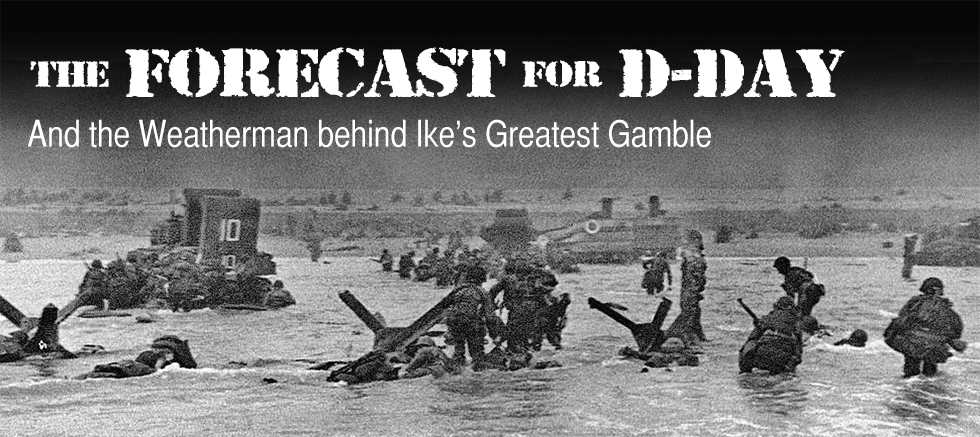
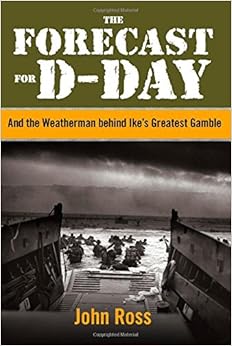
The first of the three lectures is called, “The Forecast for D-Day: The Weatherman behind Ike’s Greatest Gamble”. If you have ever wondered just how much the weather changed the course of history during the war then you must join us at the Welcome Center at noon.

Add caption
As you may already know, the Allied Expeditionary Force experienced less than ideal weather conditions on June 6, 1944. The seas were rough and stormy, the sky grey and foggy. While the men were aided by the grey cover, the seas roughed them up to the point of sickness. But those conditions were better than the ones they would have faced the day before on June 5, the original landing date. Author John Ross narrates the captivating history of how an entire invasion could be moved by twenty-four hours and the outcome of such a decision if proven faulty.

The lecture will be held in the Welcome Center at 12 PM until 1 PM. There will be a slide presentation and open discussion afterwards. Admission is free, but donations are appreciated.


Hope to see you there!

Take Care,
Elizabeth

Tuesday, January 14, 2014

D-Day Through the Decades: 1954 Commemoration


As we prepare for the 70th Anniversary, I wanted to start a new segment to look at the past anniversaries of Normandy landings.  We will begin with the 10th Anniversary of D-Day—6 June 1954.  World War II was over, the Cold War was in full swing, and the United States had just fought in the Korean War.  The 83rd Congress of the United States had worked at the urging of veterans service organizations to rededicate “Armistice Day” to “Veterans D  This act was approved on June 1, 1954—just a few days shy of the 10th Anniversary of the landings.
ay” in order to acknowledge and show support to all our nation’s veterans.

On June 6, Eisenhower, as President of the United States, released the following statement:

THIS DAY is the tenth anniversary of the landing of the Allied Expeditionary Force in Normandy. That combined land-sea-air operation was made possible by the joint labors of cooperating nations. It depended for its success upon the skill, determination and self-sacrifice of men from several lands. It set in motion a chain of events which affected the history of the entire world.

Despite the losses and suffering involved in that human effort, and in the epic conflict of which it was a part, we today find in those experiences reasons for hope and inspiration. They remind us particularly of the accomplishments attainable through close cooperation and friendship among free peoples striving toward a common goal. Some of my most cherished memories of that campaign are those of friendly cooperation with such distinguished military leaders of foreign nations as Field Marshal Montgomery, Admiral Ramsay, Marshal of the Royal Air Force Tedder, Marshal de Lattre de Tassigny, Marshal Juin and Marshal; Leclerc. I recall my pleasant association with the outstanding Soviet soldier, Marshal Zhukov, and the victorious meeting at the Elbe of the Armies of the West and of the East.

These lessons of unity and cooperation have by no means been lost in the trying period of reconstruction since the fighting stopped. Rather, we see peoples, once bitter enemies, burying their antagonisms and joining together to meet the problems of the postwar world. If all those nations which were members of the Grand Alliance have not maintained in time of peace the spirit of that wartime union, if some of the peoples who were our comrades-in-arms have been kept apart from us that is cause for profound regret, but not for despair. The courage, devotion and faith which brought us through the perils of war will inevitably bring us success in our unremitting search for peace, security and freedom.

Accounts from 1954 note that the ceremonies were discreet in Normandy.  You can view a short video of the commemoration ceremonies here: http://www.britishpathe.com/video/d-day-commemorated-in-normandy/query/DDAY+ANNIVERSARY. 

Below is an account from a Canadian media outlet on the tenth ceremony:

Hundreds of Victoria and Island war veterans this weekend will relive their experiences of a decade ago on the beaches of Normandy.  Sunday is the 10th anniversary of D-Day, when the massive power of the Western Allies' three service arms joined to deal the first blow in a series that led to the smashing of Hitler's Nazi Germany.

Face to face with the enemy for the first time under most fearsome conditions, the boys rose to great heights as they fought through to their first objective," said Lieut.-Col. Desmond G. Crofton, 49, of Salt Spring Island.  Then a major, he commanded "C" Company, the first unit of Victoria's "Fighting First" Battalion of the Canadian Scottish Regiment to storm the beachheads.

It was a costly action.

"Three hours later and three miles in, we had about 30 per cent killed and wounded," said Col. Crofton.

When Gordon H. Hobson, 33, of Elk Lake, a flight lieutenant with RAF fighter squadrons, looked down and saw the great mass of shipping heading for France, he recalled "the wonderful feeling I got all over me."

"It was a feeling of being unified with them, an uplift that pep talk could never inspire.

"I felt suddenly very big and very strong. For the first time in the war, I got the feeling that we were invincible," said the Englishman who has been resident in Canada and Victoria for the last six years.”

Locally, Ray Nance, one of the Bedford Boys to return home, organized a memorial service in town on the 10th Anniversary to honor the memory of the 19 men lost by the community in the action on 6 June 1944.  He also helped secure the memorial stone given to the Bedford Boys in 1954 by the grateful people of France for the 10th Anniversary of D-Day.  Dedication of the stone occurred with a crowd of over 4,000 people.  Taylor Feller's mother unveiled the memorial carved from the very care near Vierville sur Mer that served as the first command post for Major General Charles H. Gerhardt.

Homage to be unveiled on 6 June 2014
D-Day veteran Captain Edward Gearing, of Maryland,was in the crowd and stated "Company A was different from other organizations.  It was made up of 'home town' folks--fathers, cousins, etc.  Under these circumstances it is more difficult to see these men die and as difficult to return to the same community and resume the same way of life."  Bedford survivors were present as were family members of the men who did not come home.

Just as in 1954, we will be honoring the memory of all the soldiers who fought on D-Day.  As part of the 70th Anniversary Ceremony, we will be unveiling a new statue on site to remember the sacrifice that our community, the town of Bedford, made on 6 June 1944.  We hope you join us for this monumental event as we honor the heroes of our past.

Be sure to stay up-to-date on all our activities with the 70th Anniversary at our website http://www.dday.org/70th-anniversary-events. 

Until next time,

Felicia 


Sources